
Implant surgery is the most advanced dental application that fully restores a patient’s natural aesthetics, sensation, and chewing function by replacing lost teeth with biocompatible artificial roots (implants) placed into the jawbone. Considered the "gold standard" in the treatment of missing teeth today, this method permanently resolves tooth loss without causing any damage to adjacent healthy teeth. At Dentmetrik, by utilizing the latest digital dentistry technologies and world-class, certified implant brands, we offer our patients permanent and flawless implant treatments that allow them to smile with confidence for a lifetime.
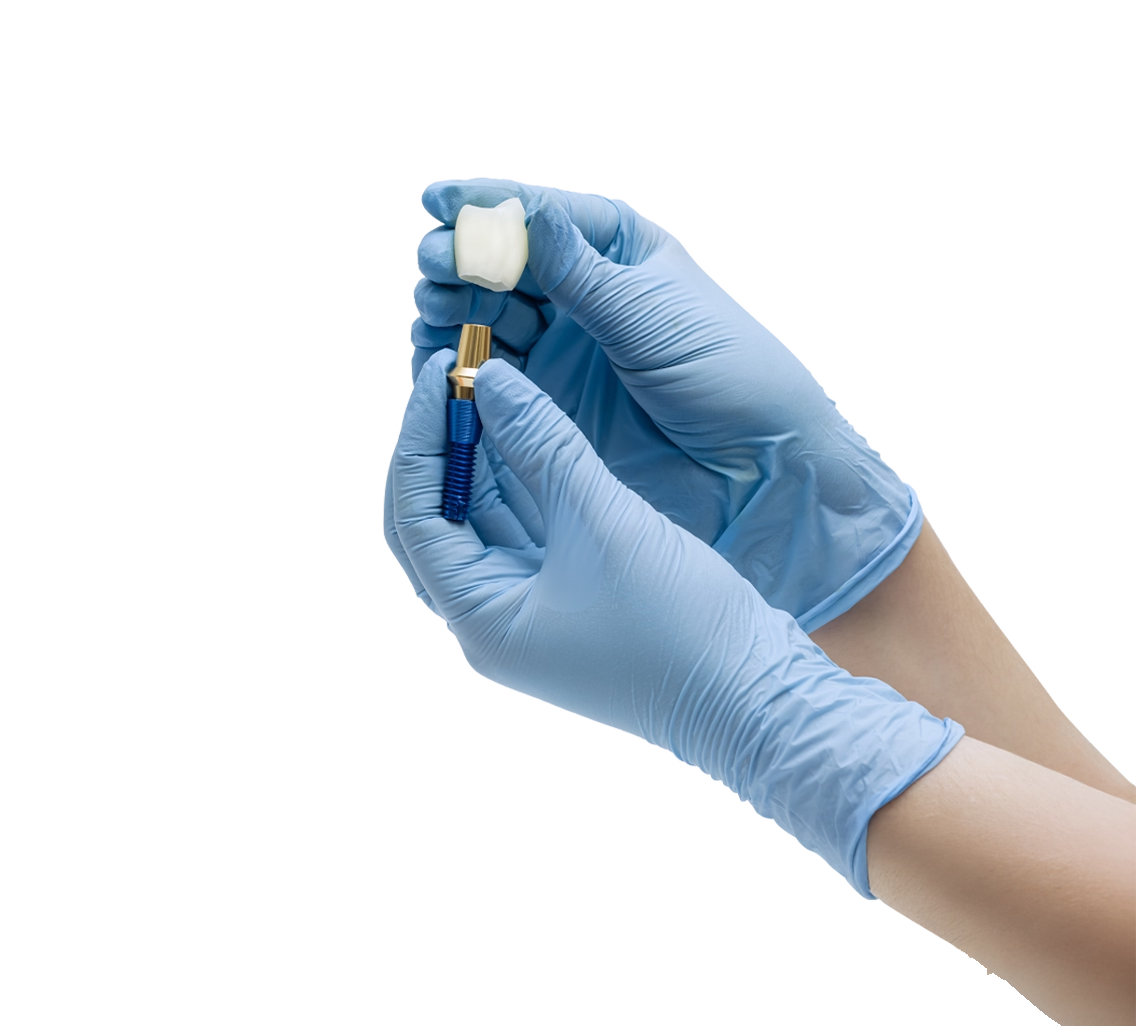
Implant surgery is the process of surgically placing artificial roots—small screw-like structures made of pure titanium or titanium alloys, which are tissue-friendly (biocompatible) materials—into the jawbone (alveolar bone). Once placed, these titanium screws are surrounded by bone cells and become an integral part of the body. In medical terms, this biological fusion process is called "osseointegration." After the implant has fully integrated with the jawbone, an intermediate piece called an "abutment" is attached, and finally, the structure is topped with a porcelain or zirconium crown tailored specifically to the patient’s oral anatomy.
The primary objective of this innovative treatment is to permanently eliminate the physical, functional, and psychological problems caused by tooth loss. When a tooth is lost, the jawbone in that area begins to resorb and lose volume over time because it is deprived of chewing pressure. The most significant medical goal of implant surgery is to halt this bone resorption by transmitting a natural stimulatory force back to the jawbone through the artificial root. Additionally, restoring 100% of the patient’s chewing power, correcting speech impairments, preventing digestive system issues, and restoring facial contours to ensure aesthetic integrity are among the core goals of implant treatment.
Implant surgery can be applied using various techniques across a wide spectrum, depending on the extent of tooth loss, the quality of the jawbone, and patient expectations. The primary types of implants offered at Dentmetrik clinics include:
The implant process begins with a detailed examination at our clinic. At this stage, 3D Dental Tomography (CBCT) is used to analyze bone thickness, density, the location of nerve canals, and sinus cavities with millimeter precision. If the bone volume is sufficient, surgical planning proceeds immediately. If there is bone deficiency, preparatory surgeries such as bone grafting or sinus lifting are included in the process.
The surgical phase is conducted under strictly sterile conditions using local anesthesia. Patients feel absolutely no pain during the procedure; only a slight vibration and pressure may be felt. The gum is precisely opened, a socket matching the diameter and length of the implant is prepared in the bone, and the titanium implant is placed. Placing a single implant typically takes only 15–20 minutes.
After the operation, a waiting period is required for the implant to fully bond with the bone (osseointegration)—averaging 2–3 months for the lower jaw and 3–4 months for the upper jaw (up to 6 months if bone powder was used). Aesthetic temporary prostheses are provided so the patient is never without teeth. Once healing is complete, the second stage begins: the implants are uncovered, and measurements are taken using traditional materials or digital intraoral scanners (CAD/CAM). After a few fitting sessions, the permanent porcelain or zirconium teeth—designed to match the patient’s facial features, tooth color, and bite—are fixed onto the implants, concluding the process with a perfect smile.
The greatest advantage of implant surgery is that it provides the sensation, appearance, and biological function closest to one's original teeth. Unlike traditional bridges, which require the grinding down (cutting) of healthy adjacent teeth, implant treatment preserves the integrity of neighboring teeth. Issues common with traditional removable dentures—such as irritation, movement while eating, the risk of slipping while speaking, or a decreased sense of taste—are completely eliminated with implant-supported fixed teeth. Patients can chew any food, including hard items (apples, nuts, etc.), with maximum force.
Furthermore, implants protect the jawbone. The bone resorption that occurs after tooth extraction is halted by the mechanical pressure the implant applies within the bone, preventing the facial profile from collapsing and looking prematurely aged. Because titanium does not decay and is unaffected by oral fluids, dental implants—with proper oral hygiene and routine check-ups—are the most economical and permanent long-term tooth replacement method.
Contact Dentmetrik today to receive detailed information about personalized implant prices, All-on-4/6 procedures, the high-end materials we use, and our health tourism privileges in Ankara, or to create an appointment through our free online consultation.
Dental implants are biocompatible structures largely composed of titanium, used in cases of tooth loss. Fundamentally, an implant is a fixed structure placed into the jawbone that represents the root part of the tooth. Thanks to abutments placed onto the implant, a solid foundation is created for the upcoming prosthesis, and the function of the missing tooth is restored.
Implant treatment has a wide range of applications, from single-tooth deficiencies to cases involving multiple missing teeth. It can be applied in long edentulous (toothless) areas ending with a tooth or in completely edentulous jaw structures. Prostheses made via implants can be applied as fixed restorations or used as support elements to increase retention under removable dentures.
Dental implant treatment is a method that can be safely applied to many patients. However, certain health conditions require careful treatment planning. Patients who have received high-dose radiation therapy, individuals with serious hematological diseases, or individuals with specific psychiatric conditions may not be suitable for implant treatment. Additionally, patients with metabolic disorders such as uncontrolled diabetes, hypertension, or thyroid diseases should have their treatment plans evaluated carefully.
Factors such as heavy smoking and alcohol consumption, inadequate oral hygiene, or the presence of active gum infections can also negatively affect the success of implant treatment. If these conditions are brought under control, implant treatment can be safely applied to most patients.
Dental implants are not of a single type. Variations in the characteristics of the alloy used, the structure of the implant surface, the screw form, the connection type with prosthetic parts, and the variety of abutments lead to the production of different types of implant systems.
Not every implant system is suitable for every clinical situation. When choosing an implant, many criteria are evaluated, such as the patient's bone height, bone width, bone density, and the aesthetic importance of the area where the implant will be applied. Furthermore, the planned prosthetic structure and functional needs directly influence the choice of implant.
The success of implant treatment is not solely related to the placement of the implant. The patient's general health, the quality of the bone tissue, smoking habits, and the precision of the surgical technique are important factors determining long-term success. Additionally, the surface characteristics of the implant, its placement in the correct position, and the accurate planning of the prosthesis placed on top directly affect success. Balanced distribution of the forces acting on the implant also ensures its healthy, long-term use.
Implant surgery can often be performed under local anesthesia without the need for general anesthesia. During the surgical procedure, soft tissues over the bone are lifted, and sockets where the implants will be placed are prepared. The implants are then placed into these sockets, and the soft tissues are closed with sutures. Depending on the surgical plan, one-stage or two-stage implant applications may be preferred. However, sufficient bone tissue and keratinized soft tissue must be present for the implant to be applied.
In patients with bone or soft tissue deficiencies, tissue augmentation procedures can be performed before or during the same session as the implant application. For bone tissue deficiencies, autogenous grafts obtained from the person's own tissue, human-derived allografts, animal-derived xenografts, or synthetic materials can be used. The material to be used is determined by the extent of the deficiency, its location, and the surgical planning.
In modern implant surgery, various surgical techniques such as guided bone regeneration, autogenous block graft applications, sinus lifting, the alveolar split method, and distraction osteogenesis can be utilized. In cases where bone quantity is limited, alternative implant methods such as zygomatic implants, pterygoid implants, or subperiosteal implants can also be applied. Furthermore, All-on-4 or All-on-6 treatment approaches, where implants are placed at an angle, may be preferred in these cases. With the advancement of technology, guided implant surgery using personalized surgical guides and navigation-assisted implant applications are becoming widespread today.
Implant placement can be planned at different timings in relation to tooth extraction. In some cases, the implant can be applied in the same session as the extraction. In other cases, waiting a few weeks for soft tissue healing may be preferred. In more advanced cases, implant placement may be planned after both soft and hard tissues have fully healed. The timing of treatment is determined by the patient's bone and tissue condition.
While prosthetic application on the implant can be done in the early period under certain suitable conditions, in most cases, it is preferred to wait for the implant to fully fuse with the bone. This process, called osseointegration, usually takes several months and is a crucial stage for the long-term stability of the implant. Following the completion of this process, the planned fixed or removable prosthesis is applied onto the implant.
As with any surgical procedure, some complications can occur in implant surgery. Although rare, impacts on neighboring anatomical structures, nerve damage, or sinus problems may arise during the operation. Post-operatively, conditions such as infection, soft tissue problems, failure of the implant to establish sufficient connection with the bone, or bone loss around the implant may develop. Therefore, it is of great importance that implant surgery is planned and performed by experienced physicians.
The patient's compliance with recommended care instructions directly affects the success of the treatment after implant surgery. Slight bleeding and swelling in the first few days are normal. Cold applications, regular use of medications prescribed by the physician, and maintaining oral hygiene support the healing process. It is important to avoid hot and hard foods in the initial days, not to strain the treated area, and to follow the care protocol recommended by the physician.
For implants to be used healthily for a long time, attention must be paid to oral hygiene, and regular dental check-ups must be conducted. Reducing or quitting smoking positively affects the survival of implants. In case of any unexpected developments, consulting a dentist without delay is important for the healthy continuation of the treatment.
Tooth deficiency is not just an aesthetic problem; it can also affect chewing function, speech, and general oral health. Dental implant treatment is one of the long-lasting and reliable treatment options aimed at restoring the function and aesthetics of missing teeth. Since every patient's oral structure, bone condition, and general health circumstances are different, implant treatment must be planned personally. A detailed examination and radiological evaluation are necessary to create an appropriate treatment plan.
You can contact us to receive more information about dental implant treatment, learn about suitable treatment options for your existing tooth deficiencies, or receive an evaluation from our specialist physicians. Our expert team will provide you with detailed information about the treatment process, planning, and possible options.
Placing implants into the jawbone usually finishes in a single session. However, an average of 2-3 months is expected for the lower jaw and 3-4 months for the upper jaw for the implant to fuse with the bone (osseointegration). In cases where bone powder is used, this period can extend up to 6 months.
Dental implants are produced from tissue-friendly pure titanium and are not perceived as foreign substances by the body; therefore, an allergic condition such as "tissue rejection" is not in question. The success rate of implants performed in expert hands and under sterile conditions is over 98%.
Yes, you can. In cases where the bone volume is insufficient, a new and solid bone foundation is created for the implant with advanced surgical techniques such as bone powder (graft) addition and sinus lifting in the upper jaw, before or in the same session as the implant placement.
Absolutely not. During the process of waiting for your implants to fuse with the bone, you are provided with temporary prostheses (fixed or removable) that will not impair your aesthetics and speech. You do not continue your social life without teeth.
A correctly planned implant treatment performed with high-quality materials can be used safely for a lifetime, provided that the patient pays attention to oral hygiene, limits smoking, and does not neglect routine doctor check-ups.

 Send us a message
 +90 (216) 766 41 00