Restorative dental treatments is the branch of dentistry applied to restore the anatomical form, chewing function, and natural aesthetics of teeth that have suffered material loss due to decay, trauma, wear, or developmental disorders.
Restorative dental treatments is the branch of dentistry applied to restore the anatomical form, chewing function, and natural aesthetics of teeth that have suffered material loss due to decay, trauma, wear, or developmental disorders. At the heart of these treatments lies the "minimally invasive" approach—the core philosophy of modern dentistry—which aims to preserve the patient’s own natural tooth tissue to the maximum extent. At Dentmetrik, we leave behind the unappealing appearance and tissue incompatibility of black (amalgam) fillings; by using nanotechnological composites and full ceramic (porcelain) materials, we repair the damage to your teeth with a flawless, natural look that is absolutely indistinguishable from the outside.
Definition and Purpose of Restorative Dental Treatments
Restorative dental treatment is the process of completely cleaning decayed tissue from structural impairments occurring in the enamel (the outermost hard layer) and dentin (the primary tissue under the enamel), and then filling the cavity with biocompatible restoration materials that mimic the tooth’s form. Acids produced by bacterial plaque accumulating on the tooth surface dissolve the enamel over time, creating decay cavities. If these cavities are not cleaned and restored with a biocompatible filling material in a timely manner, bacteria reach the vital nerve chamber (pulp) inside the tooth, initiating a destructive process that leads to severe pain, abscesses, and ultimately, tooth extraction.
The primary medical purpose of restorative treatments is to halt this destructive progression of decay at the earliest stage, prevent fractures by supporting the weakened walls of the tooth, and relieve the patient of sensitivity problems caused by hot, cold, or sweet foods. Beyond functional goals, it also serves a very strong aesthetic purpose. Closing gaps between front teeth (diastema), lengthening broken tips, masking permanent stains on the tooth surface, or correcting developmental shape deformities fall directly under the expertise of restorative dentistry. Thanks to the chemical bonding (adhesion) properties of the materials used (composite or ceramic), a structure is obtained that behaves like a natural part of the tooth, is highly resistant to chewing forces, and is long-lasting.
Types and Applications of Restorative Dental Treatments
Restorative treatments are applied with different techniques and materials based on the size of the material loss in the tooth, the position of the tooth in the mouth (front or back region), and the patient's aesthetic expectations. The primary types of restorative dental treatments we offer at Dentmetrik clinics include:
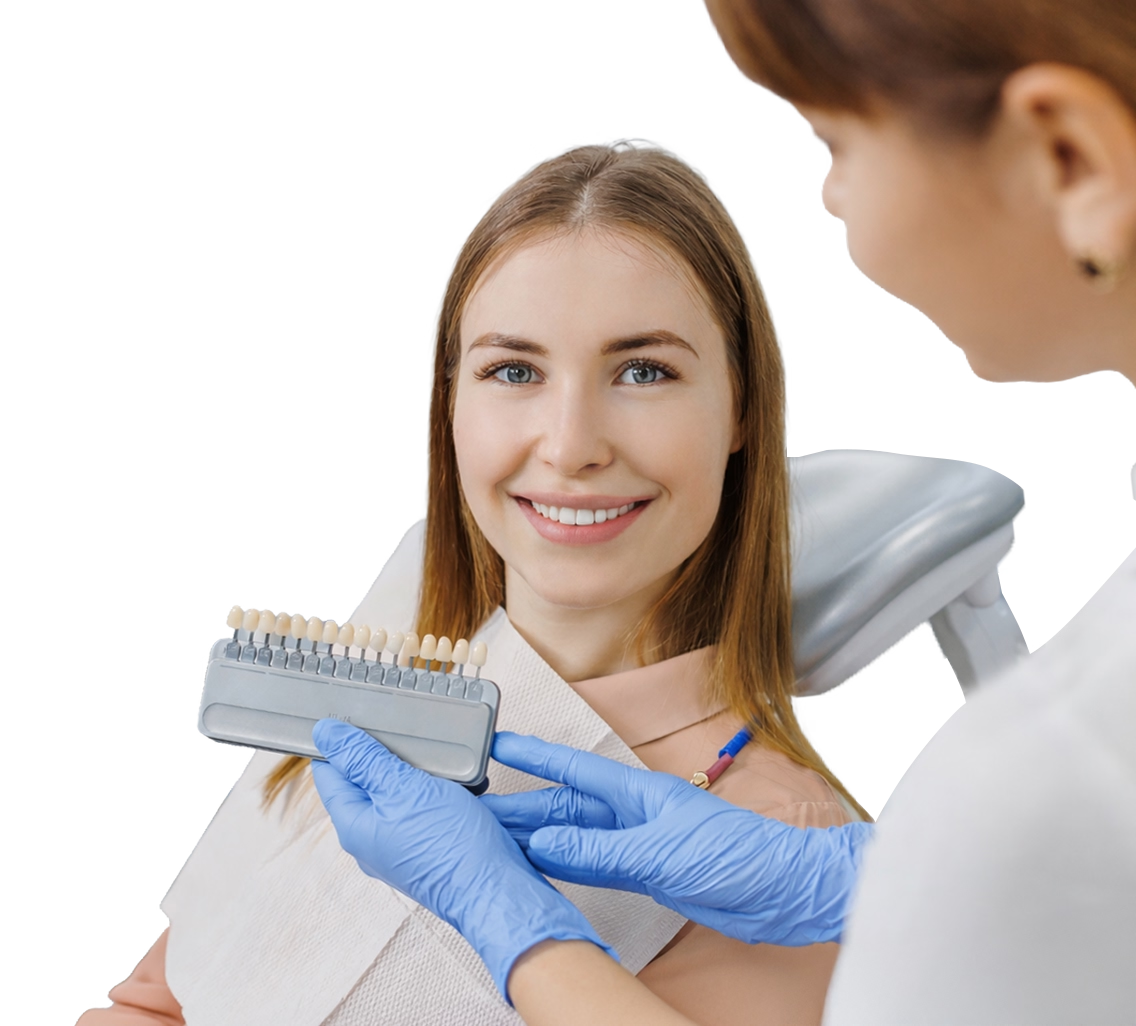
Composite Fillings (Aesthetic White Fillings): The most common standard method used in decay treatment today. These are nanotechnological resin-based fillings that can be selected in shades identical to the tooth color, placed while in a paste consistency, and hardened with blue light (halogen/LED). They are used safely for both aesthetic repairs in the front region and pressure-resistant fillings in the back region.
Inlay and Onlay Restorations (Porcelain Fillings): Laboratory-produced ceramic fillings used when the material loss is too large to be covered by a classic composite filling, but we do not wish to reduce the tooth enough to cover it completely with zirconium or porcelain (crown). They are produced with CAD/CAM devices using digital impressions taken after the decay is cleaned and are then bonded to the tooth. They are much more resistant to fracture and wear than composites.
Composite Laminae (Bonding Applications): Single-session aesthetic restorations performed by adding only composite material to change the form, color, or size of the teeth without any abrasion (or with minimal roughening). It is an excellent and fast cosmetic solution for joining separated teeth, repairing broken front teeth, or correcting slight crowding.
Amalgam (Black) Filling Replacement: The safe removal of mercury-containing gray/black metal fillings—which were performed in past years and now impair aesthetics or have failing margins—using modern isolation techniques and replacing them with aesthetic, healthy white composite fillings.
Tooth Wear and Sensitivity Treatments: Treating wedge-shaped abrasions and severe stinging occurring at the necks of the teeth due to hard brushing (abrasion), teeth grinding (bruxism), or acidic drink consumption (erosion) by covering them with special restorative materials.
The Procedure and Process
At our Dentmetrik clinic, restorative procedures are carried out with precise clinical protocols to maximize patient comfort and the lifespan of the filling. The treatment process begins by determining the depth of the decay through radiological and clinical examination. If the decayed tissue is deep, local anesthesia is applied to ensure the patient feels no pain or ache. Decayed, softened, and infected black/brown tooth tissues are completely cleaned, leaving only healthy, hard enamel/dentin tissue.
In composite filling or bonding procedures, the tooth surface is roughened at a microscopic level with a special solution called "acid-etching." A bonding agent is then applied and fixed with light. This ensures the filling adheres chemically to the tooth. The composite material is placed in thin layers corresponding to the natural anatomy (cusps and grooves) of the tooth, and each layer is hardened with light. In the final stage, the height (occlusion) of the filling is checked, excess parts are removed, and the filling surface is polished with polishing rubbers until it shines like your own natural tooth. Composite restorations are generally completed in a single session within 30–45 minutes.
In inlay and onlay (porcelain filling) restorations, the process is two-staged. After the decay is cleaned and the tooth cavity is prepared, a digital impression is taken with intraoral scanners. This impression is sent to the laboratory or in-clinic milling devices (CAD/CAM) to produce the porcelain filling from ceramic blocks. The produced ceramic piece is bonded to the tooth using high-strength adhesive systems. Thanks to their stain-resistant structure, porcelain restorations maintain their aesthetic quality and chewing resistance for many years.
What Are the Advantages of Restorative Dental Treatments?
The greatest advantage of restorative dental treatments is their "preventive" nature, which saves the tooth from extraction or complex root canal treatment. Thanks to decay being detected early and closed with an aesthetic filling, the patient’s own natural tooth root and pulp (nerve) tissue continue to maintain vitality. Because the modern composite and porcelain materials used mimic the natural light transmittance (translucency) and color reflections of the tooth, it is never noticed that you have a filling when you smile or speak, no matter how wide you open your mouth. This flawless aesthetic directly increases the patient’s self-confidence in social life.
The chemical bonding of materials to the tooth completely eliminates the risk of "cracking the tooth via the wedge effect," which was seen in old amalgam fillings. Restorative materials increase the tooth's resistance by reducing its fragility. Additionally, solutions like composite bonding, which can be applied in a single session, offer a fantastic, economical, and fast alternative to high-cost and long-lasting porcelain crown treatments without requiring significant tooth reduction. Reshaping chewing surfaces according to natural tooth anatomy also aids the digestive system by ensuring food is ground correctly.
Contact us immediately to get detailed information about aesthetic composite filling prices, porcelain inlay/onlay restorations, our single-session smile design applications with bonding, and the privileged treatments we offer as Dentmetrik in Ankara, and to schedule an appointment.
Frequently Asked Questions
Do composite (white) fillings yellow over time due to tea or coffee?⊕
The risk of discoloration is minimized thanks to modern nanotechnological composite fillings and the high polishing procedure we apply. Even if slight dulling occurs over the years with heavy tea/coffee and cigarette consumption, fillings regain their first-day brightness with a 5-minute polishing process to be performed during routine check-ups.
Should I change my old amalgam (black) fillings in my mouth?⊕
If you have an aesthetic discomfort with your amalgam fillings, if fractures, leaks, or gaps between the tooth and the filling have formed at the edges of the filling, they must absolutely be replaced with aesthetic and healthy white (composite/porcelain) fillings because it carries a risk of decay underneath.
Does the "Bonding" application performed in a single session damage my tooth?⊕
No, the biggest advantage of the bonding (composite lamina) procedure is that it is applied without any abrasion from the tooth enamel or by making only microscopic roughening. It is a protective and wonderful aesthetic procedure that does not harm your tooth tissue at all.
What is the difference between a porcelain filling (Inlay/Onlay) and a standard composite filling?⊕
In cases where tissue loss is very large, a composite filling can break. Porcelain fillings (inlay/onlay), on the other hand, are many times more resistant to chewing forces compared to composites because they are produced from ceramic in the laboratory, never change color, and 100% preserve the form of the tooth.
Is it normal for my tooth to ache after the decay is cleaned and the filling is done?⊕
After deep decays are cleaned and the filling process is done, it is a completely normal and temporary situation to feel a slight ache against cold/hot foods for up to 1-2 weeks due to the process of the tooth's nerve adapting to external stimuli.
Post Treatment Care & Recovery
Post Surgery Care
At our hospital, we prioritise your comfort, safety, and well-being throughout your surgical journey. Before your procedure, we make sure you are fully informed about every aspect of your surgery, including what to expect, how to prepare, and important post-operative care guidelines. Our goal is to give you peace of mind, knowing that you are in expert hands.
While complications are rare, we ensure you are fully informed about any potential risks. We will provide a clear explanation of what constitutes a complication and what is covered in your package, including the provision for revision surgery, if required. Your peace of mind is our top priority.
Do familiarise yourself with our revision surgery policy here (WEB VH Revision Surgery Policy) before securing your surgery date with a deposit payment. We want to ensure you have all the information you need before making this important decision.
Our team of highly experienced surgeons, specialists, and nursing staff will take every precaution to minimise the risk of complications. This comprises of:
Thorough disinfection of the surgical site
The application of compression to aid healing when necessary
Drains to reduce fluid buildup, ensuring a smoother recovery
After your procedure, you'll be welcomed into your private, comfortable room, located close to a nurse's station. Every room is equipped with two nurse-call buttons, one at the head of your bed and one in the bathroom, allowing you to easily request help without moving whenever needed. Additionally, your surgeon will visit you twice daily—once in the morning and once in the evening—to review your progress and address any concerns.
We are proud to offer modern facilities which are continually updated, equipped with the latest medical technologies and practices. This commitment to innovation allows us to provide you with the highest standard of care possible.
Your recovery is of the greatest importance. Upon your return to your room, our team will closely monitor your vitals and well-being to ensure a smooth post-surgery experience. Throughout your stay, your nutrition and fluid intake will be carefully managed by our in-house dietitians to support your recovery.
If any irregularities are detected during your recovery, your post-operative stay may be extended, allowing us to continue providing you with the specialised care you need. Your surgeon will make this decision based on your unique situation.
In some cases, drains are placed to prevent fluid buildup, making the recovery process easier. Rest assured, your doctor will monitor these closely and remove them when it's safe to do so.
Resuming Normal Activities
Please consult your doctor on when you can resume normal activities, as this varies based on the severity of your surgery. For Aesthetic Surgery, training and sports should be avoided for at least eight weeks post-surgery, or as specifically advised for your case. If you have any concerns, please do not hesitate to contact DentMetrik.
Follow-Up Care and Communication
In case of any issues when you are back in your home country, you can reach us using the contact numbers provided. The actions we take in response to complications depend on the specific issue.
Once this issue has been raised, we will usually arrange a follow-up consultation with the patient, either via phone or video call, to speak with the surgeon. In some cases, the surgeon may request additional photos of the complication to assess it more thoroughly. Based on the surgeon's evaluation, the patient may receive updated care instructions, additional medication recommendations, be directed to a relevant healthcare facility, or be invited back to our hospital for further treatment if necessary.
Additionally, we issue complication insurance to offer added protection and advantages for our patients, and we stand firmly behind the care we provide. Reach out to us for more information about this.
Healing Process and Swelling
For Aesthetic Surgery, swelling can last 6 to 12 months. Some patients experience minimal swelling within the first six months, while for others, it may take up to 18 months.
We use cookies
We use cookies to improve your browsing experience and analyse our traffic. By clicking "Accept All", you consent to our use of cookies. Learn more
GİZLİLİK POLİTİKASI
Kişisel Verilerin Korunması Kanunu Kapsamında Hasta Aydınlatma Metni
1. Veri Sorumlusu
6698 sayılı Kişisel Verilerin Korunması Kanunu (KVKK) uyarınca, kişisel verileriniz; veri sorumlusu olarak ÇENGELKÖY MAH. PROF. DR. BEYNUN AKYAVAŞ CAD. NO:33/AA ÜSKÜDAR adresinde faaliyet gösteren DENTMETRİK SAĞLIK HİZMETLERİ LİMİTED ŞİRKETİ (Klinik) tarafından aşağıda açıklanan kapsamda işlenmektedir.
Bu aydınlatma metni; Klinik'in hastalarına hizmet sunması ve hizmet sunduğu hastalarına ilişkin bu metinde belirtilen kişisel verilerinin sistemine kaydedilmesi kapsamında hastaların KVKK uyarınca aydınlatılması amacıyla hazırlanmıştır.
Açık Rıza:
Belirli bir konuya ilişkin, bilgilendirilmeye ve özgür iradeye dayanan, tereddüde yer bırakmayacak açıklıkta, sadece o işlemle sınırlı olarak verilen onay.
Anonim Hale Getirme:
Kişisel verilerin, başka verilerle eşleştirilerek dahi hiçbir surette kimliği belirli veya belirlenebilir bir gerçek kişiye ilişkilendirilemeyecek hale getirilmesi.
İlgili Kişi:
Kişisel verisi işlenen gerçek kişi.
Kişisel Veri:
Kimliği belirli veya belirlenebilir gerçek kişiye ilişkin her türlü bilgi.
Kişisel Verilerin İşlenmesi:
Kişisel verilerin tamamen veya kısmen otomatik olan ya da herhangi bir veri kayıt sisteminin parçası olmak kaydıyla otomatik olmayan yollarla elde edilmesi, kaydedilmesi, depolanması, saklanması, değiştirilmesi, yeniden düzenlenmesi, açıklanması, aktarılması, devralınması, elde edilebilir hale getirilmesi, sınıflandırılması ya da kullanılmasının engellenmesi gibi veriler üzerinde gerçekleştirilen her türlü işlem.
Veri Sorumlusu:
Kişisel verilerin işleme amaçlarını ve vasıtalarını belirleyen, veri kayıt sisteminin kurulmasında ve yönetilmesinden sorumlu gerçek veya tüzel kişi.
Kişisel verileriniz, KVKK'da düzenlendiği üzere aşağıda yer alan temel ilkeler doğrultusunda işlenir:
Hukuka ve dürüstlük kurallarına uygun olma
Doğru ve gerektiğinde güncel olma
Belirli, açık ve meşru amaçlar için işlenme
İşlendikleri amaçla bağlantılı, sınırlı ve ölçülü olma
İlgili mevzuatta öngörülen veya işlendikleri amaç için gerekli olan süre kadar muhafaza edilme
2. İşlenen Veri Türleri ve Veri Kategorileri
Veri Kategorisi
Veri Türleri
Kimlik
Ad-soyad, TCKN, uyruk, doğum tarihi, cinsiyet
İletişim
GSM, e-posta adresi, adres
Özlük
Meslek
Müşteri İşlem
Hasta tipi, geliş şekli, tavsiye edilen doktor, anlaşmalı kurum, sağlık turizm acentesi, fatura bilgileri, randevu tarihi ve aldığı hizmet, gelecek randevu, yapılan bildirimler, son ziyareti ve ilgilenen doktor
Finansal Bilgiler
Borç/bakiye tutarı, tedavi tutarı, toplam ödeme tutarı ve şekli
Sağlık Bilgileri
Hastalık bilgisi, geçirdiği hastalıklar/kalıcı hastalıklar, kullandığı ilaçlar, geçirdiği ameliyatlar, kan grubu, tedavi bilgisi, röntgen, rapor, reçete, dişlerin durumu ve daha önce yapılan tedaviler
Diğer Bilgiler
Anne adı, baba adı, anne ve baba GSM ve e-posta adresleri, anne ve baba meslek, diş fırçası ve diş macunu türleri, ağız bakım suyu ve diş ipi markası, hobiler
3. Kişisel Verileri Toplama Yöntemleri
Klinik, bu aydınlatma metninde belirtilen verileri hastalarından sözlü olarak, yazılı form doldurulması suretiyle, sunulan hizmet kapsamında veya elektronik ortamlar aracılığıyla kendisine iletilmesi ile KVKK'da belirtilen kişisel veri işleme şartlarına uygun bir şekilde elde etmekte ve aşağıda belirtilen amaçlarla uyumlu olarak işlemektedir.
4. Kişisel Verileri İşleme Amaçları ve Hukuki Sebepleri
Veri Kategorileri
İşleme Amaçları
Hukuki Sebepler
Kimlik, Müşteri İşlem, Finans
İş faaliyetlerinin yürütülmesi/denetimi, finans ve muhasebe işlerinin yürütülmesi, mal/hizmet satış faaliyetlerinin yürütülmesi, saklama ve arşiv faaliyetlerinin yürütülmesi, sözleşme süreçlerinin yürütülmesi, yönetim faaliyetlerinin yürütülmesi
Sözleşmenin kurulması veya ifasıyla doğrudan ilgili olması; Klinik'in hukuki yükümlülüğünü yerine getirebilmesi için zorunlu olması
İletişim
İletişim faaliyetlerinin yürütülmesi, iş faaliyetlerinin yürütülmesi/denetimi, mal/hizmet üretim ve operasyon süreçlerinin yürütülmesi, ürün/hizmetlerin pazarlama süreçlerinin yürütülmesi, sözleşme süreçlerinin yürütülmesi
Sözleşmenin kurulması veya ifasıyla doğrudan ilgili olması kaydıyla, sözleşmenin taraflarına ait kişisel verilerin işlenmesinin gerekli olması
Özlük, Diğer Bilgiler
İş faaliyetlerinin yürütülmesi/denetimi, müşteri ilişkileri yönetimi süreçlerinin yürütülmesi, müşteri memnuniyetine yönelik aktivitelerin yürütülmesi, saklama ve arşiv faaliyetlerinin yürütülmesi
İlgili kişinin temel hak ve özgürlüklerine zarar vermemek kaydıyla, Klinik'in meşru menfaatleri için veri işlenmesinin zorunlu olması
Sağlık Bilgileri
İş faaliyetlerinin yürütülmesi/denetimi, iş sürekliliğinin sağlanması, faaliyetlerin mevzuata uygun yürütülmesi, mal/hizmet satış faaliyetlerinin yürütülmesi, saklama ve arşiv faaliyetlerinin yürütülmesi
Sözleşmenin kurulması veya ifasıyla doğrudan ilgili olması; sizlerden aldığımız açık rızanız
5. Kişisel Verilerin Aktarılması
Klinik, kişisel verilerinizi "bilme gereği" ve "kullanma gereği" ilkelerine uygun olarak, gerekli veri minimizasyonunu sağlayarak ve gerekli teknik ve idari güvenlik tedbirlerini alarak işlemeye özen göstermektedir.
Kişisel verileriniz işbu metinde yer alan işlenme amaçlarının yerine getirilmesi amacıyla yurtiçi veya açık rızanızın alınması kaydıyla yurt dışında bulunan aşağıdaki gruplara aktarılabilir:
Klinik içi faaliyetlerin sürdürülebilmesi ve devamlılığının sağlanması amacıyla hizmet alınan yurt içinde veya yurt dışında bulunan tedarikçilerle paylaşılması
Kanunen yükümlülüklerimizi yerine getirebilmemiz için yetkili kamu kurum veya kuruluşlarıyla paylaşılması
6. İlgili Kişinin Hakları
Kişisel verilerin korunmasına ilişkin mevzuat kapsamında:
Kişisel verilerinizin işlenip işlenmediğini öğrenme
Kişisel verilerinizin işlenmesi halinde buna ilişkin bilgi talep etme
Kişisel verilerinizin işlenme amacını ve bunların amacına uygun kullanılıp kullanılmadığını öğrenme
Yurt içinde veya yurt dışında kişisel verilerinin aktarıldığı üçüncü kişileri bilme
Kişisel verilerinizin eksik veya yanlış işlenmiş olması ya da değişmesi halinde bunların düzeltilmesini isteme
KVKK'da öngörülen koşullara uygun olarak kişisel verilerinizin silinmesini veya yok edilmesini isteme
Eksik veya yanlış olarak işlenmiş kişisel verilerinizin düzeltildiğinin ve kişisel verilerinizin silindiğinin yahut yok edildiğinin kişisel verilerinin aktarıldığı üçüncü kişilere bildirilmesini isteme
İşlenen verilerinizin münhasıran otomatik sistemler vasıtasıyla analiz edilmesi suretiyle aleyhinize bir sonuç ortaya çıkmasına itiraz etme
Kişisel verilerinizin kanuna aykırı olarak işlenmesi sebebiyle zarara uğramanız halinde zararın giderilmesini talep etme
Haklarınıza ilişkin taleplerinizi belirtmek ve kişisel verileriniz üzerindeki haklarınızı kullanmak amacıyla; ÇENGELKÖY MAH. PROF. DR. BEYNUN AKYAVAŞ CAD. A BLOK NO:33/AA ÜSKÜDAR adresine fiziken yazılı olarak, güvenli elektronik imzayla veya mobil imzayla imzalanarak, KEP adresiniz vasıtasıyla veya daha önce bildirilen ve sistemlerimizde kayıtlı bulunan elektronik posta adresinizi kullanmak suretiyle [email protected] adresine e-posta göndererek başvurabilirsiniz.
Klinik, talebinizin niteliğine göre talebi en kısa sürede ve en geç otuz gün içinde ücretsiz olarak sonuçlandıracaktır. Ancak, işlemin ayrıca bir maliyeti gerektirmesi hâlinde, Kişisel Verileri Koruma Kurulu'nca belirlenen tarifedeki ücret alınacaktır.
Açık Rıza Metni: Klinik tarafından "Klinik Hasta Aydınlatma Metni" içerisinde detaylandırılan sağlık bilgilerimin; başta iş faaliyetlerinin yürütülmesi/denetimi, iş sürekliliğinin sağlanması, faaliyetlerin mevzuata uygun yürütülmesi ve mal/hizmet satış faaliyetlerinin yürütülmesi amaçları olmak üzere Klinik Hasta Aydınlatma Metni'nde yer alan kapsam, sınır ve amaçlar doğrultusunda işlenmesine ve aktarılmasına rıza gösteriyorum.
1. Data Controller
In accordance with the Law No. 6698 on the Protection of Personal Data (KVKK), your personal data is processed by DENTMETRİK SAĞLIK HİZMETLERİ LİMİTED ŞİRKETİ (the Clinic), operating at ÇENGELKÖY MAH. PROF. DR. BEYNUN AKYAVAŞ CAD. NO:33/AA ÜSKÜDAR, as the data controller within the scope explained below.
This information notice has been prepared to inform patients in accordance with KVKK within the scope of the Clinic's provision of services to its patients and the recording of personal data specified in this notice into its systems.
Explicit Consent:
Consent given for a specific matter, based on being informed and free will, clear enough to leave no room for doubt, and limited only to that specific transaction.
Anonymization:
Rendering personal data in such a way that it cannot be associated with an identified or identifiable natural person, even when matched with other data.
Data Subject:
The natural person whose personal data is processed.
Personal Data:
Any information relating to an identified or identifiable natural person.
Processing of Personal Data:
Any operation performed on personal data, wholly or partly by automated means or by non-automated means as part of a data filing system, including collection, recording, storage, preservation, alteration, reorganization, disclosure, transfer, acquisition, making available, classification, or prevention of use.
Data Controller:
The natural or legal person who determines the purposes and means of processing personal data and is responsible for the establishment and management of the data filing system.
Your personal data is processed in accordance with the following fundamental principles as regulated in KVKK:
Compliance with law and the principle of good faith
Being accurate and up to date where necessary
Being processed for specific, explicit, and legitimate purposes
Being relevant, limited, and proportionate to the purposes for which they are processed
Being retained for the period stipulated in the relevant legislation or required for the purpose for which they are processed
2. Types and Categories of Processed Data
Data Category
Data Types
Identity
Full name, national ID number, nationality, date of birth, gender
Contact
Mobile phone, email address, address
Professional
Occupation
Customer Transaction
Patient type, visit type, recommended doctor, affiliated institution, health tourism agency, invoice details, appointment date and received service, future appointments, notifications sent, last visit and attending doctor
Financial Information
Debt/balance amount, treatment amount, total payment amount and method
Health Information
Disease information, past/chronic diseases, medications used, past surgeries, blood type, treatment information, X-rays, reports, prescriptions, dental condition and previous treatments
Other Information
Mother's name, father's name, parents' mobile and email, parents' occupation, toothbrush and toothpaste types, mouthwash and dental floss brand, hobbies
3. Methods of Collecting Personal Data
The Clinic obtains the data specified in this information notice from its patients verbally, through written form completion, within the scope of services provided, or through electronic means, in compliance with the personal data processing conditions specified in KVKK, and processes them in accordance with the purposes stated below.
4. Purposes and Legal Grounds for Processing Personal Data
Data Categories
Processing Purposes
Legal Grounds
Identity, Customer Transaction, Financial
Execution/supervision of business activities, finance and accounting operations, sales activities for goods/services, storage and archiving activities, contract processes, management activities
Being directly related to the establishment or performance of a contract; being mandatory for the Clinic to fulfill its legal obligations
Contact
Communication activities, execution/supervision of business activities, production and operation processes for goods/services, marketing processes for products/services, contract processes
Processing of personal data of the parties to a contract being necessary, provided it is directly related to the establishment or performance of the contract
Professional, Other Information
Execution/supervision of business activities, customer relationship management processes, customer satisfaction activities, storage and archiving activities
Processing being mandatory for the legitimate interests of the Clinic, provided it does not harm the fundamental rights and freedoms of the data subject
Health Information
Execution/supervision of business activities, ensuring business continuity, conducting activities in compliance with legislation, sales activities for goods/services, storage and archiving activities
Being directly related to the establishment or performance of a contract; your explicit consent obtained from you
5. Transfer of Personal Data
The Clinic pays attention to processing your personal data in accordance with the principles of "need to know" and "need to use", ensuring the necessary data minimization and taking the necessary technical and administrative security measures.
Your personal data may be transferred to the following groups located domestically or, subject to obtaining your explicit consent, abroad, for the fulfillment of the processing purposes set out in this notice:
Sharing with domestic or international suppliers from whom services are received, in order to ensure the sustainability and continuity of intra-clinic activities
Sharing with authorized public institutions or organizations in order to fulfill our legal obligations
6. Rights of the Data Subject
Within the scope of legislation on the protection of personal data:
Learning whether your personal data is being processed
Requesting information about the processing if your personal data has been processed
Learning the purpose of processing your personal data and whether they are used in accordance with their purpose
Knowing the third parties to whom your personal data has been transferred domestically or abroad
Requesting the correction of your personal data if it has been processed incompletely or incorrectly, or if it has changed
Requesting the deletion or destruction of your personal data in accordance with the conditions stipulated in KVKK
Requesting that the correction, deletion, or destruction of your personal data be notified to third parties to whom personal data has been transferred
Objecting to a result that arises against you through the exclusive analysis of processed data via automated systems
Requesting compensation for damages if you suffer loss due to unlawful processing of your personal data
To exercise your rights regarding your personal data, you may apply in writing to ÇENGELKÖY MAH. PROF. DR. BEYNUN AKYAVAŞ CAD. A BLOK NO:33/AA ÜSKÜDAR, or by sending an email signed with a secure electronic signature or mobile signature via your registered email address to [email protected].
The Clinic will conclude your request free of charge as soon as possible and within thirty days at the latest, depending on the nature of the request. However, if the transaction requires an additional cost, the fee determined by the Personal Data Protection Board will be charged.
Explicit Consent Statement: I consent to the processing and transfer of my health information detailed in the "Clinic Patient Information Notice" by the Clinic, in accordance with the scope, limits, and purposes set out in the Clinic Patient Information Notice, primarily for the purposes of executing/supervising business activities, ensuring business continuity, conducting activities in compliance with legislation, and executing sales activities for goods/services.
1. Verantwortlicher
Gemäß dem Gesetz Nr. 6698 zum Schutz personenbezogener Daten (KVKK) werden Ihre personenbezogenen Daten von der DENTMETRİK SAĞLIK HİZMETLERİ LİMİTED ŞİRKETİ (Klinik), ansässig unter der Adresse ÇENGELKÖY MAH. PROF. DR. BEYNUN AKYAVAŞ CAD. NR:33/AA ÜSKÜDAR, als Verantwortlicher im nachfolgend erläuterten Umfang verarbeitet.
Dieser Informationstext wurde erstellt, um Patienten gemäß KVKK im Rahmen der Leistungserbringung der Klinik und der Erfassung der in diesem Text genannten personenbezogenen Daten in deren Systeme zu informieren.
Ausdrückliche Einwilligung:
Einwilligung, die sich auf ein bestimmtes Thema bezieht, auf Information und freiem Willen beruht, unmissverständlich klar ist und nur auf die betreffende Verarbeitung beschränkt ist.
Anonymisierung:
Die Umwandlung personenbezogener Daten in eine Form, die selbst durch Verknüpfung mit anderen Daten nicht mehr einer bestimmten oder bestimmbaren natürlichen Person zugeordnet werden kann.
Betroffene Person:
Die natürliche Person, deren personenbezogene Daten verarbeitet werden.
Personenbezogene Daten:
Jede Art von Informationen, die sich auf eine bestimmte oder bestimmbare natürliche Person beziehen.
Verarbeitung personenbezogener Daten:
Jeder Vorgang, der an personenbezogenen Daten durchgeführt wird, ganz oder teilweise automatisiert oder nicht automatisiert als Teil eines Datenablagesystems, einschließlich Erhebung, Aufzeichnung, Speicherung, Aufbewahrung, Änderung, Neuordnung, Offenlegung, Übertragung, Übernahme, Zugänglichmachung, Klassifizierung oder Verhinderung der Nutzung.
Verantwortlicher:
Die natürliche oder juristische Person, die die Zwecke und Mittel der Verarbeitung personenbezogener Daten bestimmt und für die Einrichtung und Verwaltung des Datenablagesystems verantwortlich ist.
Ihre personenbezogenen Daten werden gemäß den folgenden im KVKK geregelten Grundprinzipien verarbeitet:
Übereinstimmung mit dem Gesetz und dem Grundsatz von Treu und Glauben
Richtigkeit und Aktualität, soweit erforderlich
Verarbeitung für bestimmte, eindeutige und rechtmäßige Zwecke
Relevanz, Beschränkung und Verhältnismäßigkeit in Bezug auf die Verarbeitungszwecke
Aufbewahrung für den in der einschlägigen Gesetzgebung vorgesehenen Zeitraum oder für den Zeitraum, der für den Verarbeitungszweck erforderlich ist
Name der Mutter, Name des Vaters, Mobilnummern und E-Mail-Adressen der Eltern, Beruf der Eltern, Zahnbürsten- und Zahnpastatypen, Mundwasser- und Zahnseide-Marke, Hobbys
3. Methoden der Erhebung personenbezogener Daten
Die Klinik erhebt die in diesem Informationstext genannten Daten von ihren Patienten mündlich, durch Ausfüllen schriftlicher Formulare, im Rahmen der erbrachten Leistungen oder über elektronische Medien, in Übereinstimmung mit den im KVKK festgelegten Bedingungen für die Verarbeitung personenbezogener Daten, und verarbeitet sie gemäß den nachfolgend genannten Zwecken.
4. Zwecke und Rechtsgrundlagen der Verarbeitung personenbezogener Daten
Datenkategorien
Verarbeitungszwecke
Rechtsgrundlagen
Identität, Kundentransaktionen, Finanzen
Durchführung/Überwachung der Geschäftstätigkeit, Finanz- und Buchhaltungsvorgänge, Verkaufsaktivitäten für Waren/Dienstleistungen, Speicherung und Archivierung, Vertragsprozesse, Managementaktivitäten
Direkter Zusammenhang mit der Begründung oder Erfüllung eines Vertrags; Erforderlichkeit für die Erfüllung der gesetzlichen Verpflichtungen der Klinik
Kontakt
Kommunikationsaktivitäten, Durchführung/Überwachung der Geschäftstätigkeit, Produktions- und Betriebsprozesse für Waren/Dienstleistungen, Marketingprozesse für Produkte/Dienstleistungen, Vertragsprozesse
Erforderlichkeit der Verarbeitung personenbezogener Daten der Vertragsparteien, sofern dies in direktem Zusammenhang mit der Begründung oder Erfüllung des Vertrags steht
Beruf, Sonstige Informationen
Durchführung/Überwachung der Geschäftstätigkeit, Kundenbeziehungsmanagement, Kundenzufriedenheitsaktivitäten, Speicherung und Archivierung
Erforderlichkeit der Verarbeitung für die berechtigten Interessen der Klinik, sofern die Grundrechte und Grundfreiheiten der betroffenen Person nicht beeinträchtigt werden
Gesundheitsinformationen
Durchführung/Überwachung der Geschäftstätigkeit, Sicherstellung der Geschäftskontinuität, gesetzeskonforme Durchführung der Aktivitäten, Verkaufsaktivitäten für Waren/Dienstleistungen, Speicherung und Archivierung
Direkter Zusammenhang mit der Begründung oder Erfüllung eines Vertrags; Ihre von Ihnen erteilte ausdrückliche Einwilligung
5. Übermittlung personenbezogener Daten
Die Klinik achtet darauf, Ihre personenbezogenen Daten nach den Grundsätzen der „Erforderlichkeit der Kenntnis" und „Erforderlichkeit der Nutzung" zu verarbeiten, die notwendige Datenminimierung sicherzustellen und die erforderlichen technischen und administrativen Sicherheitsmaßnahmen zu treffen.
Ihre personenbezogenen Daten können zur Erfüllung der in diesem Text genannten Verarbeitungszwecke an folgende Gruppen im Inland oder – vorbehaltlich Ihrer ausdrücklichen Einwilligung – im Ausland übermittelt werden:
Weitergabe an in- oder ausländische Lieferanten, von denen Dienstleistungen bezogen werden, um die Nachhaltigkeit und Kontinuität der klinikinternen Aktivitäten zu gewährleisten
Weitergabe an befugte öffentliche Institutionen oder Organisationen zur Erfüllung unserer gesetzlichen Verpflichtungen
6. Rechte der betroffenen Person
Im Rahmen der Gesetzgebung zum Schutz personenbezogener Daten:
Erfahren, ob Ihre personenbezogenen Daten verarbeitet werden
Anforderung von Informationen über die Verarbeitung, falls Ihre personenbezogenen Daten verarbeitet wurden
Erfahren des Zwecks der Verarbeitung Ihrer personenbezogenen Daten und ob sie zweckgemäß verwendet werden
Kenntnis der Dritten, an die Ihre personenbezogenen Daten im In- oder Ausland übermittelt wurden
Beantragung der Berichtigung Ihrer personenbezogenen Daten, wenn sie unvollständig oder fehlerhaft verarbeitet wurden oder sich geändert haben
Beantragung der Löschung oder Vernichtung Ihrer personenbezogenen Daten gemäß den im KVKK vorgesehenen Bedingungen
Beantragung der Benachrichtigung Dritter, an die personenbezogene Daten übermittelt wurden, über die Berichtigung, Löschung oder Vernichtung Ihrer personenbezogenen Daten
Widerspruch gegen ein Ergebnis, das durch ausschließlich automatisierte Analyse verarbeiteter Daten zu Ihrem Nachteil entsteht
Schadensersatzforderung bei Schäden durch rechtswidrige Verarbeitung Ihrer personenbezogenen Daten
Um Ihre Rechte in Bezug auf Ihre personenbezogenen Daten auszuüben, können Sie schriftlich an die Adresse ÇENGELKÖY MAH. PROF. DR. BEYNUN AKYAVAŞ CAD. A BLOK NR:33/AA ÜSKÜDAR oder per E-Mail mit sicherer elektronischer Signatur oder mobiler Signatur über Ihre registrierte E-Mail-Adresse an [email protected] einen Antrag stellen.
Die Klinik wird Ihren Antrag je nach Art so schnell wie möglich und spätestens innerhalb von dreißig Tagen kostenlos bearbeiten. Sollte der Vorgang jedoch zusätzliche Kosten verursachen, wird die vom Datenschutzrat festgelegte Gebühr erhoben.
Einwilligungserklärung: Ich willige ein, dass meine im „Patienten-Informationstext der Klinik" aufgeführten Gesundheitsinformationen von der Klinik im Einklang mit dem Umfang, den Grenzen und Zwecken des Patienten-Informationstextes verarbeitet und übermittelt werden, insbesondere zum Zweck der Durchführung/Überwachung der Geschäftstätigkeit, Sicherstellung der Geschäftskontinuität, gesetzeskonformen Durchführung der Aktivitäten und Verkaufsaktivitäten für Waren/Dienstleistungen.
DENTMETRİK ÇEREZ POLİTİKASI
Son güncelleme: 16 Ocak 2025
Giriş
DentMetrik ("biz", "bize" veya "bizim") https://dentmetrik.com/ web sitesinde ("Hizmet") çerezler kullanmaktadır. Bu siteyi kullanarak çerezlerin kullanımına onay vermiş olursunuz. Bu Çerez Politikası; çerezlerin ne olduğunu, çerezleri nasıl kullandığımızı, iş ortağı olabileceğimiz üçüncü tarafların Hizmet üzerinde çerezleri nasıl kullanabileceğini, çerezlere ilişkin tercihlerinizi ve çerezler hakkında daha fazla bilgiyi açıklamaktadır.
Çerezler nedir?
Çerezler, ziyaret ettiğiniz bir web sitesi tarafından web tarayıcınıza gönderilen küçük metin parçalarıdır. Bir çerez dosyası web tarayıcınızda saklanır ve Hizmet'in veya üçüncü bir tarafın sizi tanımasını, bir sonraki ziyaretinizi kolaylaştırmasını ve Hizmet'i sizin için daha faydalı hale getirmesini sağlar.
Çerezler "kalıcı" veya "oturum" çerezleri olabilir. Kalıcı çerezler, çevrimdışı olduğunuzda kişisel bilgisayarınızda veya mobil cihazınızda kalır; oturum çerezleri ise web tarayıcınızı kapattığınızda silinir.
DentMetrik çerezleri nasıl kullanır?
Hizmet'i kullandığınızda ve eriştiğinizde, web tarayıcınıza bir dizi çerez dosyası yerleştirebiliriz.
Çerezleri aşağıdaki amaçlarla kullanıyoruz:
Hizmet'in belirli işlevlerini etkinleştirmek
Analiz verileri sağlamak
Web sitemizde kullanılan çerezlerin ayrıntılı listesi için lütfen Bölüm 6 - "Kullandığımız Çerez Türleri" kısmına bakınız.
Üçüncü taraf çerezleri
Kendi çerezlerimize ek olarak, Hizmet'in kullanım istatistiklerini raporlamak, Hizmet üzerinden reklam sunmak ve benzeri amaçlarla çeşitli üçüncü taraf çerezleri de kullanabiliriz.
Çerezlere ilişkin tercihleriniz
Çerezleri silmek veya web tarayıcınıza çerezleri silme ya da reddetme talimatı vermek isterseniz, lütfen web tarayıcınızın yardım sayfalarını ziyaret ediniz.
Ancak çerezleri silerseniz veya kabul etmeyi reddederseniz, sunduğumuz tüm özellikleri kullanamayabileceğinizi, tercihlerinizi kaydedemeyebileceğinizi ve bazı sayfalarımızın düzgün görüntülenmeyebileceğini lütfen unutmayınız.
Chrome tarayıcı için Google'ın şu sayfasını ziyaret ediniz: https://support.google.com/accounts/answer/32050
Internet Explorer tarayıcı için Microsoft'un şu sayfasını ziyaret ediniz: http://support.microsoft.com/kb/278835
Firefox tarayıcı için Mozilla'nın şu sayfasını ziyaret ediniz: https://support.mozilla.org/en-US/kb/delete-cookies-remove-info-websites-stored
Safari tarayıcı için Apple'ın şu sayfasını ziyaret ediniz: https://support.apple.com/kb/PH21411?locale=en_US
Diğer web tarayıcıları için lütfen tarayıcınızın resmi web sayfalarını ziyaret ediniz.
Çerezler hakkında daha fazla bilgiyi nereden bulabilirsiniz?
Çerezler hakkında daha fazla bilgiyi aşağıdaki üçüncü taraf web sitelerinden edinebilirsiniz:
All About Cookies: http://www.allaboutcookies.org/
Zorunlu çerezler, güvenli oturum açma veya onay tercihlerinizi ayarlama gibi bu sitenin temel özelliklerini etkinleştirmek için gereklidir. Bu çerezler kişisel olarak tanımlanabilir herhangi bir veri saklamaz.
Çerez
Süre
Açıklama
crisp-client*
6 ay
Crisp, web sitesindeki sohbet işlevi için bu çerezi ayarlar.
cookieyes-consent
1 yıl
CookieYes, kullanıcıların onay tercihlerini hatırlamak için bu çerezi ayarlar; böylece sonraki ziyaretlerde tercihlerine uyulur. Site ziyaretçileri hakkında herhangi bir kişisel bilgi toplamaz veya saklamaz.
Analiz Çerezleri
Analiz çerezleri, ziyaretçilerin web sitesiyle nasıl etkileşimde bulunduğunu anlamak için kullanılır. Bu çerezler; ziyaretçi sayısı, hemen çıkma oranı, trafik kaynağı gibi metriklere ilişkin bilgi sağlar.
Çerez
Süre
Açıklama
_ga
1 yıl 1 ay 4 gün
Google Analytics, ziyaretçi, oturum ve kampanya verilerini hesaplamak ve sitenin analiz raporu için site kullanımını izlemek amacıyla bu çerezi ayarlar. Çerez bilgileri anonim olarak saklar ve benzersiz ziyaretçileri tanımak için rastgele oluşturulmuş bir numara atar.
_ga_*
3 ay
Google Tag Manager, hizmetlerini kullanan web sitelerinin reklam verimliliğini denemek amacıyla bu çerezi ayarlar.
_ga_*
1 yıl 1 ay 4 gün
Google Analytics, sayfa görüntülemelerini saklamak ve saymak için bu çerezi ayarlar.
_fbp
3 ay
Facebook, web sitesini ziyaret ettikten sonra Facebook'ta veya Facebook reklamcılığı tarafından desteklenen bir dijital platformda reklam göstermek için bu çerezi ayarlar.
Reklam Çerezleri
Reklam çerezleri, daha önce ziyaret ettiğiniz sayfalara göre size özelleştirilmiş reklamlar sunmak ve reklam kampanyalarının etkinliğini analiz etmek için kullanılır.
Çerez
Süre
Açıklama
test_cookie
15 dakika
doubleclick.net, kullanıcının tarayıcısının çerezleri destekleyip desteklemediğini belirlemek için bu çerezi ayarlar.
IDE
1 yıl 24 gün
Google DoubleClick IDE çerezleri, kullanıcının web sitesini nasıl kullandığına dair bilgi depolar ve kullanıcı profiline göre ilgili reklamları sunar.
Introduction
DentMetrik ("us", "we", or "our") uses cookies on the https://dentmetrik.com/ website (the "Service"). By using this site, you consent to the use of cookies. This Cookies Policy explains what cookies are, how we use cookies, how third-parties we may partner with may use cookies on the Service, your choices regarding cookies and further information about cookies.
What are cookies
Cookies are small pieces of text sent to your web browser by a website you visit. A cookie file is stored in your web browser and allows the Service or a third-party to recognize you and make your next visit easier and the Service more useful to you.
Cookies can be "persistent" or "session" cookies. Persistent cookies remain on your personal computer or mobile device when you go offline, while session cookies are deleted as soon as you close your web browser.
How DentMetrik uses cookies
When you use and access the Service, we may place a number of cookies files in your web browser.
We use cookies for the following purposes:
To enable certain functions of the Service
To provide analytics
Please see section 6 - 'The Types Of Cookies We Use' - for a detailed list of cookies used by our website.
Third-party cookies
In addition to our own cookies, we may also use various third-parties cookies to report usage statistics of the Service, deliver advertisements on and through the Service, and so on.
What are your choices regarding cookies
If you'd like to delete cookies or instruct your web browser to delete or refuse cookies, please visit the help pages of your web browser.
Please note, however, that if you delete cookies or refuse to accept them, you might not be able to use all of the features we offer, you may not be able to store your preferences, and some of our pages might not display properly.
For the Chrome web browser, please visit this page from Google: https://support.google.com/accounts/answer/32050
For the Internet Explorer web browser, please visit this page from Microsoft: http://support.microsoft.com/kb/278835
For the Firefox web browser, please visit this page from Mozilla: https://support.mozilla.org/en-US/kb/delete-cookies-remove-info-websites-stored
For the Safari web browser, please visit this page from Apple: https://support.apple.com/kb/PH21411?locale=en_US
For any other web browser, please visit your web browser's official web pages.
Where can you find more information about cookies
You can learn more about cookies and the following third-party websites:
All About Cookies: http://www.allaboutcookies.org/
Necessary cookies are required to enable the basic features of this site, such as providing secure log-in or adjusting your consent preferences. These cookies do not store any personally identifiable data.
Cookie
Duration
Description
crisp-client*
6 months
Crisp sets this cookie for chat on website.
cookieyes-consent
1 year
CookieYes sets this cookie to remember users' consent preferences so that their preferences are respected on subsequent visits to this site. It does not collect or store any personal information about the site visitors.
Analytics
Analytics cookies are used to understand how visitors interact with the website. These cookies help provide information on metrics such as the number of visitors, bounce rate, traffic source, etc.
Cookie
Duration
Description
_ga
1 year 1 month 4 days
Google Analytics sets this cookie to calculate visitor, session and campaign data and track site usage for the site's analytics report. The cookie stores information anonymously and assigns a randomly generated number to recognize unique visitors.
_ga_*
3 months
Google Tag Manager sets the cookie to experiment advertisement efficiency of websites using their services.
_ga_*
1 year 1 month 4 days
Google Analytics sets this cookie to store and count page views.
_fbp
3 months
Facebook sets this cookie to display advertisements when either on Facebook or on a digital platform powered by Facebook advertising after visiting the website.
Advertisement
Advertisement cookies are used to provide visitors with customised advertisements based on the pages you visited previously and to analyse the effectiveness of the ad campaigns.
Cookie
Duration
Description
test_cookie
15 minutes
doubleclick.net sets this cookie to determine if the user's browser supports cookies.
IDE
1 year 24 days
Google DoubleClick IDE cookies store information about how the user uses the website to present them with relevant ads according to the user profile.
Einleitung
DentMetrik („uns", „wir" oder „unser") verwendet Cookies auf der Website https://dentmetrik.com/ (der „Dienst"). Durch die Nutzung dieser Website stimmen Sie der Verwendung von Cookies zu. Diese Cookie-Richtlinie erklärt, was Cookies sind, wie wir Cookies verwenden, wie Drittanbieter, mit denen wir zusammenarbeiten, Cookies im Dienst verwenden können, Ihre Wahlmöglichkeiten bezüglich Cookies und weitere Informationen über Cookies.
Was sind Cookies?
Cookies sind kleine Textdateien, die von einer von Ihnen besuchten Website an Ihren Webbrowser gesendet werden. Eine Cookie-Datei wird in Ihrem Webbrowser gespeichert und ermöglicht es dem Dienst oder einem Drittanbieter, Sie wiederzuerkennen, Ihren nächsten Besuch zu erleichtern und den Dienst für Sie nützlicher zu gestalten.
Cookies können „dauerhafte" oder „Sitzungs"-Cookies sein. Dauerhafte Cookies verbleiben auf Ihrem Computer oder Mobilgerät, wenn Sie offline gehen, während Sitzungs-Cookies gelöscht werden, sobald Sie Ihren Webbrowser schließen.
Wie DentMetrik Cookies verwendet
Wenn Sie den Dienst nutzen und darauf zugreifen, können wir eine Reihe von Cookie-Dateien in Ihrem Webbrowser platzieren.
Wir verwenden Cookies für folgende Zwecke:
Um bestimmte Funktionen des Dienstes zu ermöglichen
Um Analysedaten bereitzustellen
Eine detaillierte Liste der von unserer Website verwendeten Cookies finden Sie in Abschnitt 6 – „Die von uns verwendeten Cookie-Arten".
Cookies von Drittanbietern
Zusätzlich zu unseren eigenen Cookies können wir auch verschiedene Cookies von Drittanbietern verwenden, um Nutzungsstatistiken des Dienstes zu erstellen, Werbung über den Dienst auszuliefern und ähnliches.
Welche Wahlmöglichkeiten haben Sie bezüglich Cookies?
Wenn Sie Cookies löschen oder Ihren Webbrowser anweisen möchten, Cookies zu löschen oder abzulehnen, besuchen Sie bitte die Hilfeseiten Ihres Webbrowsers.
Bitte beachten Sie jedoch, dass Sie möglicherweise nicht alle von uns angebotenen Funktionen nutzen können, Ihre Einstellungen möglicherweise nicht gespeichert werden und einige unserer Seiten möglicherweise nicht korrekt angezeigt werden, wenn Sie Cookies löschen oder deren Annahme verweigern.
Für den Chrome-Browser besuchen Sie bitte diese Seite von Google: https://support.google.com/accounts/answer/32050
Für den Internet Explorer besuchen Sie bitte diese Seite von Microsoft: http://support.microsoft.com/kb/278835
Für den Firefox-Browser besuchen Sie bitte diese Seite von Mozilla: https://support.mozilla.org/en-US/kb/delete-cookies-remove-info-websites-stored
Für den Safari-Browser besuchen Sie bitte diese Seite von Apple: https://support.apple.com/kb/PH21411?locale=en_US
Für jeden anderen Webbrowser besuchen Sie bitte die offiziellen Webseiten Ihres Browsers.
Wo finden Sie weitere Informationen über Cookies?
Weitere Informationen über Cookies finden Sie auf folgenden Drittanbieter-Websites:
All About Cookies: http://www.allaboutcookies.org/
Notwendige Cookies sind erforderlich, um die grundlegenden Funktionen dieser Website zu ermöglichen, wie z. B. die sichere Anmeldung oder die Anpassung Ihrer Einwilligungseinstellungen. Diese Cookies speichern keine personenbezogenen Daten.
Cookie
Dauer
Beschreibung
crisp-client*
6 Monate
Crisp setzt dieses Cookie für die Chat-Funktion auf der Website.
cookieyes-consent
1 Jahr
CookieYes setzt dieses Cookie, um die Einwilligungseinstellungen der Benutzer zu speichern, damit ihre Präferenzen bei nachfolgenden Besuchen berücksichtigt werden. Es werden keine persönlichen Daten der Website-Besucher erfasst oder gespeichert.
Analyse-Cookies
Analyse-Cookies werden verwendet, um zu verstehen, wie Besucher mit der Website interagieren. Diese Cookies liefern Informationen zu Metriken wie Besucherzahl, Absprungrate, Verkehrsquelle usw.
Cookie
Dauer
Beschreibung
_ga
1 Jahr 1 Monat 4 Tage
Google Analytics setzt dieses Cookie, um Besucher-, Sitzungs- und Kampagnendaten zu berechnen und die Website-Nutzung für den Analysebericht zu verfolgen. Das Cookie speichert Informationen anonym und weist eine zufällig generierte Nummer zu, um eindeutige Besucher zu erkennen.
_ga_*
3 Monate
Google Tag Manager setzt dieses Cookie, um die Werbeeffizienz von Websites zu testen, die ihre Dienste nutzen.
_ga_*
1 Jahr 1 Monat 4 Tage
Google Analytics setzt dieses Cookie, um Seitenaufrufe zu speichern und zu zählen.
_fbp
3 Monate
Facebook setzt dieses Cookie, um nach dem Besuch der Website Werbung auf Facebook oder auf einer von Facebook-Werbung betriebenen digitalen Plattform anzuzeigen.
Werbe-Cookies
Werbe-Cookies werden verwendet, um Besuchern personalisierte Werbung basierend auf zuvor besuchten Seiten anzuzeigen und die Wirksamkeit von Werbekampagnen zu analysieren.
Cookie
Dauer
Beschreibung
test_cookie
15 Minuten
doubleclick.net setzt dieses Cookie, um festzustellen, ob der Browser des Benutzers Cookies unterstützt.
IDE
1 Jahr 24 Tage
Google DoubleClick IDE-Cookies speichern Informationen darüber, wie der Benutzer die Website nutzt, um ihm gemäß seinem Benutzerprofil relevante Werbung anzuzeigen.
TEDAVİ KOŞULLARI VE POLİTİKALARI
Özel Dentmetrik Ağız ve Diş Sağlığı Polikliniği Hasta Tedavi Şartları ve Garanti Politikası
1. Genel Bilgi ve Kapsam
İşbu Tedavi Koşulları ve Politikalar metni, ÇENGELKÖY MAH. PROF. DR. BEYNUN AKYAVAŞ CAD. NO:33/AA ÜSKÜDAR adresinde faaliyet gösteren DENTMETRİK SAĞLIK HİZMETLERİ LİMİTED ŞİRKETİ (bundan sonra "Klinik" olarak anılacaktır) tarafından sunulan ağız ve diş sağlığı hizmetlerine ilişkin koşulları, hasta sorumluluklarını, garanti politikasını ve tedavi sürecine dair hak ve yükümlülükleri düzenlemektedir.
Bu metin kapsamında yer alan tedavi hizmetleri şunlardır:
Ağız, Diş ve Çene Cerrahisi
İmplantoloji
Protetik Diş Tedavileri
Periodontoloji
Ortodonti
Pedodonti
Endodonti
Restoratif Diş Hekimliği
2. Tedavi Öncesi Bilgilendirme ve Onay
Klinik, tedaviye başlamadan önce hastayı tedavi planı, olası riskler, alternatif yöntemler ve tahmini maliyet hakkında bilgilendirir. Hasta, tedavi planını onayladığına dair yazılı veya elektronik onay verir. Tedaviye başlanması, hastanın bu koşulları kabul ettiği anlamına gelir.
Tedavi süresince ortaya çıkabilecek beklenmedik durumlar (ek tedavi gereksinimi, tedavi planında değişiklik vb.) hastaya derhal bildirilir ve hastanın onayı alınmadan ek işlem yapılmaz.
3. Hasta Sorumlulukları
Tedavinin başarısı büyük ölçüde hasta uyumuna bağlıdır. Hasta aşağıdaki yükümlülükleri kabul eder:
Sağlık geçmişi, kullandığı ilaçlar, alerjiler ve mevcut hastalıklar hakkında eksiksiz ve doğru bilgi vermek
Tedavi sonrası hekim tarafından verilen bakım talimatlarına eksiksiz uymak
Planlanan kontrol randevularına zamanında gelmek
Ağız hijyenini hekim önerileri doğrultusunda sürdürmek
Tedavi sonrası herhangi bir olumsuz belirti (ağrı, şişlik, kanama vb.) durumunda derhal kliniğe başvurmak
Protez, plak, aparey gibi cihazların bakım ve kullanım talimatlarına uymak
4. Tedavi Garantisi ve Yeniden Tedavi Koşulları
4.1 İmplant Tedavileri
İmplant kaynaklı komplikasyonlarda (implant kaybı, osseointegrasyon başarısızlığı), tedavi tarihinden itibaren 2 yıl içinde başvurulması kaydıyla, aynı bölgeye yeniden implant uygulaması ücretsiz olarak gerçekleştirilir. İmplant üst yapıları (kron, köprü) için garanti süresi 2 yıldır.
4.2 Protetik Tedaviler (Kron, Köprü, Protez)
Protetik restorasyonlarda malzeme veya teknik kaynaklı sorunlar (kırılma, dökülme, uyumsuzluk) için garanti süresi teslim tarihinden itibaren 2 yıldır. Bu süre içinde ücretsiz onarım veya yeniden yapım sağlanır.
4.3 Endodontik Tedaviler (Kanal Tedavisi)
Kanal tedavisi uygulanan dişlerde, tedaviden kaynaklanan bir sorun tespit edilmesi halinde, tedavi tarihinden itibaren 1 yıl içinde başvurulması kaydıyla yeniden tedavi ücretsiz olarak yapılır.
4.4 Dolgu ve Restoratif Tedaviler
Dolgu tedavilerinde, dolgunun düşmesi veya kırılması durumunda, uygulama tarihinden itibaren 1 yıl içinde başvurulması kaydıyla ücretsiz yenileme yapılır.
4.5 Ortodontik Tedaviler
Ortodontik tedavilerde, tedavi planına uyulması ve kontrol randevularına düzenli gelinmesi koşuluyla, planlanan tedavi hedefine ulaşılana kadar tedavi sürdürülür. Hastanın randevularına gelmemesi veya aparey kullanım talimatlarına uymaması durumunda tedavi sonuçları garanti kapsamı dışında kalır.
5. Garanti Kapsamı Dışında Kalan Durumlar
Aşağıdaki durumlarda tedavi garantisi geçerli değildir:
Hastanın tedavi sonrası bakım ve hijyen talimatlarına uymaması
Kontrol randevularına düzenli olarak gelinmemesi
Hastanın başka bir klinik veya hekimde müdahale yaptırması
Travma, kaza veya dış etkenlere bağlı oluşan hasarlar
Bruksizm (diş sıkma/gıcırdatma) kaynaklı hasarlar (hastanın bilgilendirilmiş ve gece plağı önerilmiş olmasına rağmen kullanılmaması halinde)
Sistemik hastalıklar (kontrolsüz diyabet, osteoporoz, bağışıklık sistemi bozuklukları vb.) nedeniyle oluşan komplikasyonlar
Sigara kullanımına bağlı tedavi başarısızlıkları (özellikle implant ve periodontoloji tedavilerinde)
Hastanın tedavi sırasında sağlık durumunu eksik veya yanlış beyan etmesi
Doğal yaşlanma sürecine bağlı aşınma ve değişiklikler
6. Randevu ve İptal Politikası
Klinik, randevu sistemiyle çalışmaktadır. Hastalarımızdan aşağıdaki kurallara uyması beklenmektedir:
Randevu iptali veya değişikliği için en az 24 saat önceden bildirim yapılmalıdır
Bildirim yapılmaksızın gelmeyen hastalar için bir sonraki randevu planlamasında öncelik hakkı kısıtlanabilir
Tedavi planı dahilinde ardışık randevulara uyulmaması halinde tedavi sonuçlarından Klinik sorumlu tutulamaz
7. Ödeme Koşulları
Tedavi ücretleri, tedavi planının onaylanmasının ardından hastaya bildirilir. Klinik aşağıdaki ödeme yöntemlerini kabul etmektedir:
Nakit ödeme
Kredi kartı / banka kartı ile ödeme
Anlaşmalı kurumlar aracılığıyla ödeme
Uzun süreli tedavilerde aşamalı ödeme planı uygulanabilir. Tedaviye başlanabilmesi için belirlenen başlangıç ödemesinin yapılmış olması gerekmektedir. Tedavi yarıda bırakılması halinde, o tarihe kadar gerçekleştirilen işlemlerin ücreti tam olarak tahsil edilir.
8. Sorumluluk Sınırı
Klinik ve hekimleri, tıbbi standartlara ve güncel diş hekimliği protokollerine uygun olarak tedavi hizmeti sunmaktadır. Her klinik prosedür belirli riskler taşımakta olup, tedavi sonuçları hastanın bireysel yapısına, sağlık durumuna ve tedaviye uyumuna göre farklılık gösterebilir. Belirli bir tedavi sonucu hedef niteliğinde olup garanti edilemez.
Klinik, mücbir sebep halleri (doğal afet, salgın hastalık, yasal düzenleme değişiklikleri vb.) nedeniyle hizmet sunumunda aksaklık yaşanması durumunda sorumlu tutulamaz.
9. Şikayet ve İletişim
Tedavi sürecinize ilişkin her türlü soru, öneri ve şikayetleriniz için aşağıdaki iletişim kanallarından bize ulaşabilirsiniz:
Adres: Çengelköy Mah. Prof. Dr. Beynun Akyavaş Cad. No:33/AA, 34680 Üsküdar/İstanbul
İşbu Tedavi Koşulları ve Politikalar metni, Klinik tarafından gerekli görüldüğünde güncellenebilir. Güncel metin her zaman Klinik'in internet sitesinde ve fiziki ortamında mevcuttur. Tedaviye başlanması, hastanın bu koşulları okuduğu ve kabul ettiği anlamına gelir.
1. General Information and Scope
This Treatment Terms and Policies document regulates the conditions regarding oral and dental health services provided by DENTMETRİK SAĞLIK HİZMETLERİ LİMİTED ŞİRKETİ (hereinafter referred to as the "Clinic"), operating at ÇENGELKÖY MAH. PROF. DR. BEYNUN AKYAVAŞ CAD. NO:33/AA ÜSKÜDAR, including patient responsibilities, warranty policy, and rights and obligations pertaining to the treatment process.
The treatment services covered under this document are:
Oral and Maxillofacial Surgery
Implantology
Prosthetic Dental Treatments
Periodontology
Orthodontics
Pedodontics
Endodontics
Restorative Dentistry
2. Pre-Treatment Information and Consent
The Clinic informs the patient about the treatment plan, potential risks, alternative methods, and estimated costs before commencing treatment. The patient provides written or electronic consent confirming their approval of the treatment plan. The commencement of treatment constitutes acceptance of these terms.
Unexpected situations that may arise during treatment (need for additional treatment, changes to the treatment plan, etc.) are immediately communicated to the patient, and no additional procedures are performed without the patient's consent.
3. Patient Responsibilities
The success of treatment depends largely on patient compliance. The patient agrees to the following obligations:
Providing complete and accurate information about medical history, medications used, allergies, and existing conditions
Fully adhering to post-treatment care instructions provided by the dentist
Attending scheduled follow-up appointments on time
Maintaining oral hygiene in accordance with the dentist's recommendations
Contacting the clinic immediately in case of any adverse symptoms (pain, swelling, bleeding, etc.) following treatment
Following care and usage instructions for devices such as prostheses, plates, and appliances
4. Treatment Warranty and Retreatment Conditions
4.1 Implant Treatments
In cases of implant-related complications (implant loss, osseointegration failure), re-implantation in the same area is performed free of charge, provided the patient applies within 2 years of the treatment date. The warranty period for implant superstructures (crowns, bridges) is 2 years.
The warranty period for material or technical issues (fracture, debonding, mismatch) in prosthetic restorations is 2 years from the date of delivery. Free repair or remake is provided within this period.
4.3 Endodontic Treatments (Root Canal Treatment)
If a treatment-related issue is identified in teeth that have undergone root canal treatment, retreatment is performed free of charge, provided the patient applies within 1 year of the treatment date.
4.4 Fillings and Restorative Treatments
In cases where a filling falls out or fractures, free replacement is provided, provided the patient applies within 1 year of the application date.
4.5 Orthodontic Treatments
For orthodontic treatments, treatment continues until the planned treatment goals are achieved, provided the treatment plan is followed and follow-up appointments are attended regularly. Treatment outcomes are excluded from warranty coverage if the patient fails to attend appointments or does not comply with appliance usage instructions.
5. Situations Excluded from Warranty Coverage
The treatment warranty does not apply in the following situations:
Failure of the patient to follow post-treatment care and hygiene instructions
Failure to attend follow-up appointments regularly
The patient receiving intervention at another clinic or by another dentist
Damage caused by trauma, accidents, or external factors
Damage caused by bruxism (teeth clenching/grinding), where the patient has been informed and a night guard has been recommended but not used
Complications arising from systemic diseases (uncontrolled diabetes, osteoporosis, immune system disorders, etc.)
Treatment failures attributed to smoking (particularly in implant and periodontology treatments)
The patient providing incomplete or inaccurate health information during treatment
Wear and changes due to the natural aging process
6. Appointment and Cancellation Policy
The Clinic operates on an appointment basis. Patients are expected to adhere to the following rules:
At least 24 hours advance notice is required for appointment cancellations or changes
Priority scheduling rights may be restricted for patients who fail to attend without prior notification
The Clinic cannot be held responsible for treatment outcomes if consecutive appointments within the treatment plan are not followed
7. Payment Terms
Treatment fees are communicated to the patient upon approval of the treatment plan. The Clinic accepts the following payment methods:
Cash payment
Credit card / debit card payment
Payment through affiliated institutions
Instalment payment plans may be applied for long-term treatments. The designated initial payment must be completed before treatment can commence. In the event that treatment is discontinued, the full fee for procedures performed up to that date will be charged.
8. Limitation of Liability
The Clinic and its dentists provide treatment services in accordance with medical standards and current dental protocols. Every clinical procedure carries certain risks, and treatment outcomes may vary depending on the patient's individual constitution, health condition, and compliance with treatment. A specific treatment outcome is a target and cannot be guaranteed.
The Clinic cannot be held liable for disruptions in service delivery due to force majeure events (natural disasters, epidemics, changes in legal regulations, etc.).
9. Complaints and Contact
For any questions, suggestions, or complaints regarding your treatment process, you may reach us through the following contact channels:
Address: Çengelköy Mah. Prof. Dr. Beynun Akyavaş Cad. No:33/AA, 34680 Üsküdar/İstanbul
This Treatment Terms and Policies document may be updated by the Clinic when deemed necessary. The current version is always available on the Clinic's website and at its physical premises. The commencement of treatment constitutes the patient's acknowledgment and acceptance of these terms.
1. Allgemeine Informationen und Geltungsbereich
Dieses Dokument zu Behandlungsbedingungen und Richtlinien regelt die Bedingungen für die von der DENTMETRİK SAĞLIK HİZMETLERİ LİMİTED ŞİRKETİ (im Folgenden „Klinik" genannt), ansässig unter ÇENGELKÖY MAH. PROF. DR. BEYNUN AKYAVAŞ CAD. NR:33/AA ÜSKÜDAR, erbrachten Mund- und Zahngesundheitsleistungen, einschließlich der Patientenverantwortlichkeiten, der Garantierichtlinie sowie der Rechte und Pflichten im Zusammenhang mit dem Behandlungsprozess.
Die unter diesem Dokument abgedeckten Behandlungsleistungen sind:
Mund-, Kiefer- und Gesichtschirurgie
Implantologie
Prothetische Zahnbehandlungen
Parodontologie
Kieferorthopädie
Kinderzahnheilkunde
Endodontie
Restaurative Zahnheilkunde
2. Aufklärung und Einwilligung vor der Behandlung
Die Klinik informiert den Patienten vor Behandlungsbeginn über den Behandlungsplan, mögliche Risiken, alternative Methoden und die geschätzten Kosten. Der Patient erteilt seine schriftliche oder elektronische Zustimmung zum Behandlungsplan. Der Behandlungsbeginn gilt als Annahme dieser Bedingungen.
Unerwartete Situationen, die während der Behandlung auftreten können (Notwendigkeit einer Zusatzbehandlung, Änderungen am Behandlungsplan usw.), werden dem Patienten unverzüglich mitgeteilt, und ohne die Zustimmung des Patienten werden keine zusätzlichen Eingriffe vorgenommen.
3. Patientenverantwortlichkeiten
Der Behandlungserfolg hängt maßgeblich von der Mitwirkung des Patienten ab. Der Patient erklärt sich mit folgenden Pflichten einverstanden:
Vollständige und korrekte Angaben zur Krankengeschichte, eingenommenen Medikamenten, Allergien und bestehenden Erkrankungen
Vollständige Befolgung der vom Zahnarzt erteilten Nachsorge-Anweisungen
Pünktliches Erscheinen zu geplanten Kontrolltermine
Aufrechterhaltung der Mundhygiene gemäß den Empfehlungen des Zahnarztes
Sofortige Kontaktaufnahme mit der Klinik bei unerwünschten Symptomen (Schmerzen, Schwellungen, Blutungen usw.) nach der Behandlung
Befolgung der Pflege- und Gebrauchsanweisungen für Geräte wie Prothesen, Platten und Apparaturen
4. Behandlungsgarantie und Bedingungen für Nachbehandlung
4.1 Implantatbehandlungen
Bei implantatbedingten Komplikationen (Implantatverlust, Versagen der Osseointegration) wird die erneute Implantation im selben Bereich kostenlos durchgeführt, sofern der Patient sich innerhalb von 2 Jahren nach dem Behandlungsdatum meldet. Die Garantiezeit für Implantat-Suprastrukturen (Kronen, Brücken) beträgt 2 Jahre.
Die Garantiezeit für material- oder technikbedingte Probleme (Bruch, Ablösung, Passungenauigkeit) bei prothetischen Restaurationen beträgt 2 Jahre ab dem Lieferdatum. Innerhalb dieses Zeitraums wird eine kostenlose Reparatur oder Neuanfertigung gewährleistet.
Wird bei wurzelkanalbehandelten Zähnen ein behandlungsbedingtes Problem festgestellt, wird die Nachbehandlung kostenlos durchgeführt, sofern der Patient sich innerhalb von 1 Jahr nach dem Behandlungsdatum meldet.
4.4 Füllungen und restaurative Behandlungen
Bei Herausfallen oder Bruch einer Füllung wird ein kostenloser Ersatz gewährt, sofern der Patient sich innerhalb von 1 Jahr nach dem Anwendungsdatum meldet.
4.5 Kieferorthopädische Behandlungen
Bei kieferorthopädischen Behandlungen wird die Behandlung bis zum Erreichen der geplanten Behandlungsziele fortgesetzt, sofern der Behandlungsplan eingehalten und die Kontrolltermine regelmäßig wahrgenommen werden. Behandlungsergebnisse sind von der Garantie ausgeschlossen, wenn der Patient Termine versäumt oder die Gebrauchsanweisungen für Apparaturen nicht befolgt.
5. Von der Garantie ausgeschlossene Situationen
Die Behandlungsgarantie gilt nicht in folgenden Situationen:
Nichtbefolgen der Nachsorge- und Hygieneanweisungen durch den Patienten
Unregelmäßige Teilnahme an Kontrolltermine
Durchführung von Eingriffen durch eine andere Klinik oder einen anderen Zahnarzt
Durch Trauma, Unfälle oder äußere Einflüsse verursachte Schäden
Durch Bruxismus (Zähneknirschen/-pressen) verursachte Schäden, obwohl der Patient informiert wurde und eine Aufbissschiene empfohlen, aber nicht verwendet wurde
Komplikationen aufgrund systemischer Erkrankungen (unkontrollierter Diabetes, Osteoporose, Immunsystemstörungen usw.)
Behandlungsversagen durch Rauchen (insbesondere bei Implantat- und Parodontologiebehandlungen)
Unvollständige oder fehlerhafte Angaben zum Gesundheitszustand durch den Patienten während der Behandlung
Verschleiß und Veränderungen durch den natürlichen Alterungsprozess
6. Termin- und Stornierungsrichtlinie
Die Klinik arbeitet auf Terminbasis. Von unseren Patienten wird die Einhaltung folgender Regeln erwartet:
Für Terminabsagen oder -änderungen ist eine Benachrichtigung mindestens 24 Stunden im Voraus erforderlich
Für Patienten, die ohne vorherige Benachrichtigung nicht erscheinen, kann das Vorrangsrecht bei der nächsten Terminplanung eingeschränkt werden
Die Klinik kann nicht für Behandlungsergebnisse verantwortlich gemacht werden, wenn aufeinanderfolgende Termine innerhalb des Behandlungsplans nicht eingehalten werden
7. Zahlungsbedingungen
Die Behandlungskosten werden dem Patienten nach Genehmigung des Behandlungsplans mitgeteilt. Die Klinik akzeptiert folgende Zahlungsmethoden:
Barzahlung
Kredit- / Debitkartenzahlung
Zahlung über Partnerinstitutionen
Für Langzeitbehandlungen können Ratenzahlungspläne angeboten werden. Die festgelegte Anfangszahlung muss vor Behandlungsbeginn geleistet werden. Im Falle eines Behandlungsabbruchs wird die volle Gebühr für bis zu diesem Zeitpunkt durchgeführte Eingriffe berechnet.
8. Haftungsbeschränkung
Die Klinik und ihre Zahnärzte erbringen Behandlungsleistungen gemäß medizinischen Standards und aktuellen zahnmedizinischen Protokollen. Jeder klinische Eingriff birgt bestimmte Risiken, und die Behandlungsergebnisse können je nach individueller Konstitution, Gesundheitszustand und Behandlungscompliance des Patienten variieren. Ein bestimmtes Behandlungsergebnis ist ein Ziel und kann nicht garantiert werden.
Die Klinik kann nicht für Unterbrechungen der Leistungserbringung aufgrund höherer Gewalt (Naturkatastrophen, Epidemien, Änderungen der Rechtsvorschriften usw.) haftbar gemacht werden.
9. Beschwerden und Kontakt
Für alle Fragen, Anregungen oder Beschwerden zu Ihrem Behandlungsprozess erreichen Sie uns über folgende Kontaktkanäle:
Adresse: Çengelköy Mah. Prof. Dr. Beynun Akyavaş Cad. Nr:33/AA, 34680 Üsküdar/İstanbul
Dieses Dokument zu Behandlungsbedingungen und Richtlinien kann von der Klinik bei Bedarf aktualisiert werden. Die aktuelle Fassung ist stets auf der Website der Klinik und in deren Räumlichkeiten verfügbar. Der Behandlungsbeginn gilt als Kenntnisnahme und Akzeptanz dieser Bedingungen durch den Patienten.


 Send us a message
 +90 (216) 766 41 00