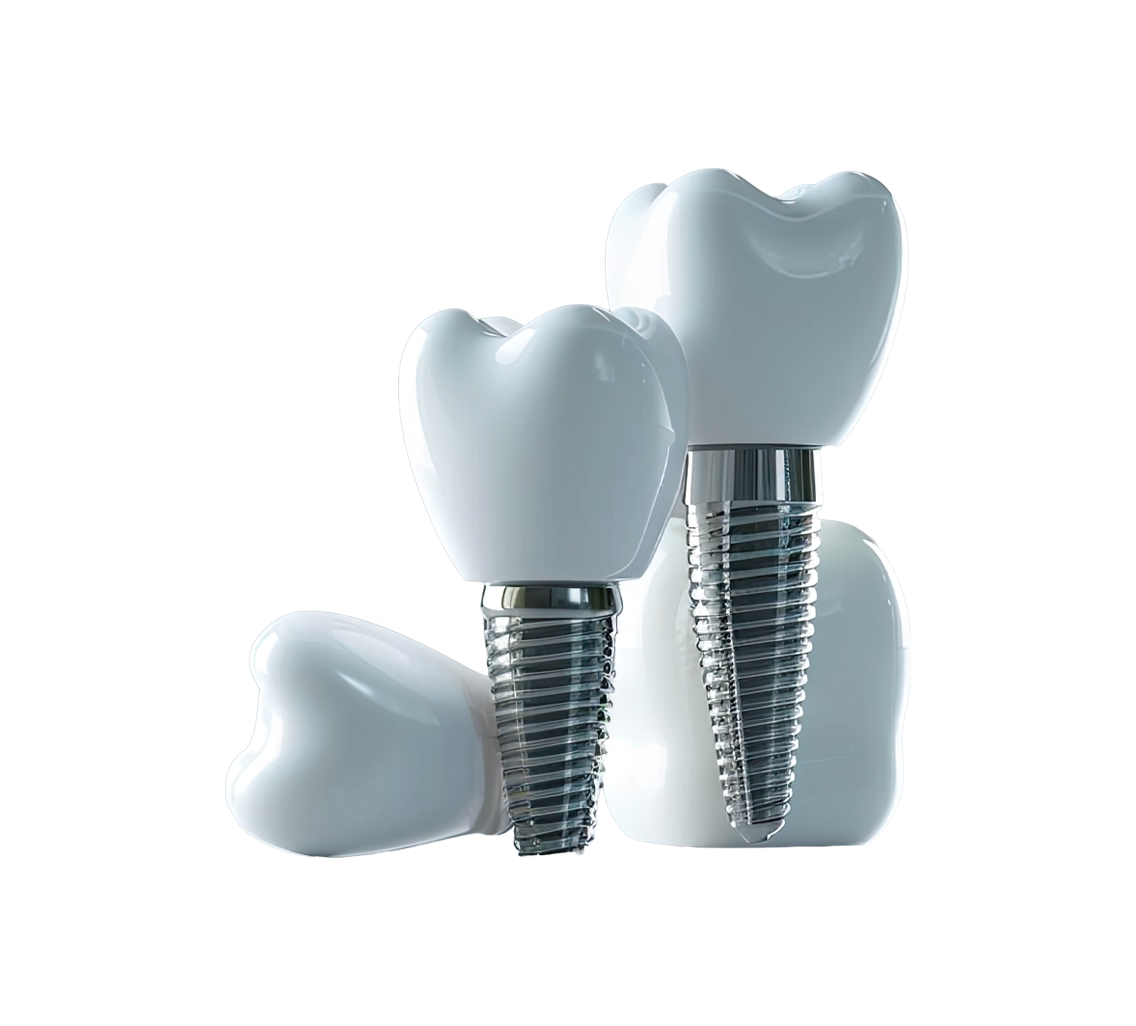


Dental implants are biocompatible structures largely composed of titanium, used in cases of tooth loss. Fundamentally, an implant is a fixed structure placed into the jawbone that represents the root part of the tooth. Thanks to abutments placed onto the implant, a solid foundation is created for the upcoming prosthesis, and the function of the missing tooth is restored.
Implant treatment has a wide range of applications, from single-tooth deficiencies to cases involving multiple missing teeth. It can be applied in long edentulous (toothless) areas ending with a tooth or in completely edentulous jaw structures. Prostheses made via implants can be applied as fixed restorations or used as support elements to increase retention under removable dentures.
Dental implant treatment is a method that can be safely applied to many patients. However, certain health conditions require careful treatment planning. Patients who have received high-dose radiation therapy, individuals with serious hematological diseases, or individuals with specific psychiatric conditions may not be suitable for implant treatment. Additionally, patients with metabolic disorders such as uncontrolled diabetes, hypertension, or thyroid diseases should have their treatment plans evaluated carefully.
Factors such as heavy smoking and alcohol consumption, inadequate oral hygiene, or the presence of active gum infections can also negatively affect the success of implant treatment. If these conditions are brought under control, implant treatment can be safely applied to most patients.
Dental implants are not of a single type. Variations in the characteristics of the alloy used, the structure of the implant surface, the screw form, the connection type with prosthetic parts, and the variety of abutments lead to the production of different types of implant systems.
Not every implant system is suitable for every clinical situation. When choosing an implant, many criteria are evaluated, such as the patient's bone height, bone width, bone density, and the aesthetic importance of the area where the implant will be applied. Furthermore, the planned prosthetic structure and functional needs directly influence the choice of implant.
The success of implant treatment is not solely related to the placement of the implant. The patient's general health, the quality of the bone tissue, smoking habits, and the precision of the surgical technique are important factors determining long-term success. Additionally, the surface characteristics of the implant, its placement in the correct position, and the accurate planning of the prosthesis placed on top directly affect success. Balanced distribution of the forces acting on the implant also ensures its healthy, long-term use.
Implant surgery can often be performed under local anesthesia without the need for general anesthesia. During the surgical procedure, soft tissues over the bone are lifted, and sockets where the implants will be placed are prepared. The implants are then placed into these sockets, and the soft tissues are closed with sutures. Depending on the surgical plan, one-stage or two-stage implant applications may be preferred. However, sufficient bone tissue and keratinized soft tissue must be present for the implant to be applied.
In patients with bone or soft tissue deficiencies, tissue augmentation procedures can be performed before or during the same session as the implant application. For bone tissue deficiencies, autogenous grafts obtained from the person's own tissue, human-derived allografts, animal-derived xenografts, or synthetic materials can be used. The material to be used is determined by the extent of the deficiency, its location, and the surgical planning.
In modern implant surgery, various surgical techniques such as guided bone regeneration, autogenous block graft applications, sinus lifting, the alveolar split method, and distraction osteogenesis can be utilized. In cases where bone quantity is limited, alternative implant methods such as zygomatic implants, pterygoid implants, or subperiosteal implants can also be applied. Furthermore, All-on-4 or All-on-6 treatment approaches, where implants are placed at an angle, may be preferred in these cases. With the advancement of technology, guided implant surgery using personalized surgical guides and navigation-assisted implant applications are becoming widespread today.
Implant placement can be planned at different timings in relation to tooth extraction. In some cases, the implant can be applied in the same session as the extraction. In other cases, waiting a few weeks for soft tissue healing may be preferred. In more advanced cases, implant placement may be planned after both soft and hard tissues have fully healed. The timing of treatment is determined by the patient's bone and tissue condition.
While prosthetic application on the implant can be done in the early period under certain suitable conditions, in most cases, it is preferred to wait for the implant to fully fuse with the bone. This process, called osseointegration, usually takes several months and is a crucial stage for the long-term stability of the implant. Following the completion of this process, the planned fixed or removable prosthesis is applied onto the implant.
As with any surgical procedure, some complications can occur in implant surgery. Although rare, impacts on neighboring anatomical structures, nerve damage, or sinus problems may arise during the operation. Post-operatively, conditions such as infection, soft tissue problems, failure of the implant to establish sufficient connection with the bone, or bone loss around the implant may develop. Therefore, it is of great importance that implant surgery is planned and performed by experienced physicians.
The patient's compliance with recommended care instructions directly affects the success of the treatment after implant surgery. Slight bleeding and swelling in the first few days are normal. Cold applications, regular use of medications prescribed by the physician, and maintaining oral hygiene support the healing process. It is important to avoid hot and hard foods in the initial days, not to strain the treated area, and to follow the care protocol recommended by the physician.
For implants to be used healthily for a long time, attention must be paid to oral hygiene, and regular dental check-ups must be conducted. Reducing or quitting smoking positively affects the survival of implants. In case of any unexpected developments, consulting a dentist without delay is important for the healthy continuation of the treatment.
Tooth deficiency is not just an aesthetic problem; it can also affect chewing function, speech, and general oral health. Dental implant treatment is one of the long-lasting and reliable treatment options aimed at restoring the function and aesthetics of missing teeth. Since every patient's oral structure, bone condition, and general health circumstances are different, implant treatment must be planned personally. A detailed examination and radiological evaluation are necessary to create an appropriate treatment plan.
You can contact us to receive more information about dental implant treatment, learn about suitable treatment options for your existing tooth deficiencies, or receive an evaluation from our specialist physicians. Our expert team will provide you with detailed information about the treatment process, planning, and possible options.
Implant surgery can be performed under local anesthesia in most cases without requiring general anesthesia.
Patients who have received high-dose radiation therapy, people with severe hematological diseases, or individuals with certain psychiatric conditions may not be suitable for implant treatment. In addition, the treatment plan should be carefully evaluated in patients with uncontrolled metabolic disorders such as diabetes, hypertension, or thyroid diseases, and in people with heavy smoking/alcohol use or inadequate oral hygiene.
Yes, in cases of bone tissue deficiencies, bone augmentation procedures can be performed using autogenous grafts obtained from the person's own tissue, human-derived allografts, animal-derived xenografts, or synthetic materials. In cases where bone volume is limited, alternative methods such as zygomatic implants or All-on-4 / All-on-6 treatment approaches can also be preferred.
Although prosthesis application on the implant can be done early under some favorable conditions, in most cases it is preferred to wait for the implant to fully fuse with the bone. This process, called osseointegration, usually takes a few months, and after its completion, the planned prosthesis is applied.
It is necessary to avoid hot and hard foods in the first days and not to strain the treated area. Applying cold, using the medications recommended by the doctor regularly, and maintaining oral hygiene support the healing process. Furthermore, reducing or quitting smoking positively affects the survival of the implants.

 Send us a message
 +90 (216) 766 41 00